Have a look around
Photographed 25 September 2026, on a phone.
These are not drawings of an app that might exist. Every picture below is a photograph of Pairstead actually running on a phone, taken on 25 September 2026. The couple in them is invented — Ana and Ben. Where the real names or a profile photo showed, they have been swapped for those, the phone's clock and buttons have been trimmed off, and on the Agreement screen the row of tabs has been redrawn to match today's layout. Nothing else has been touched — the screens are the ones you get.
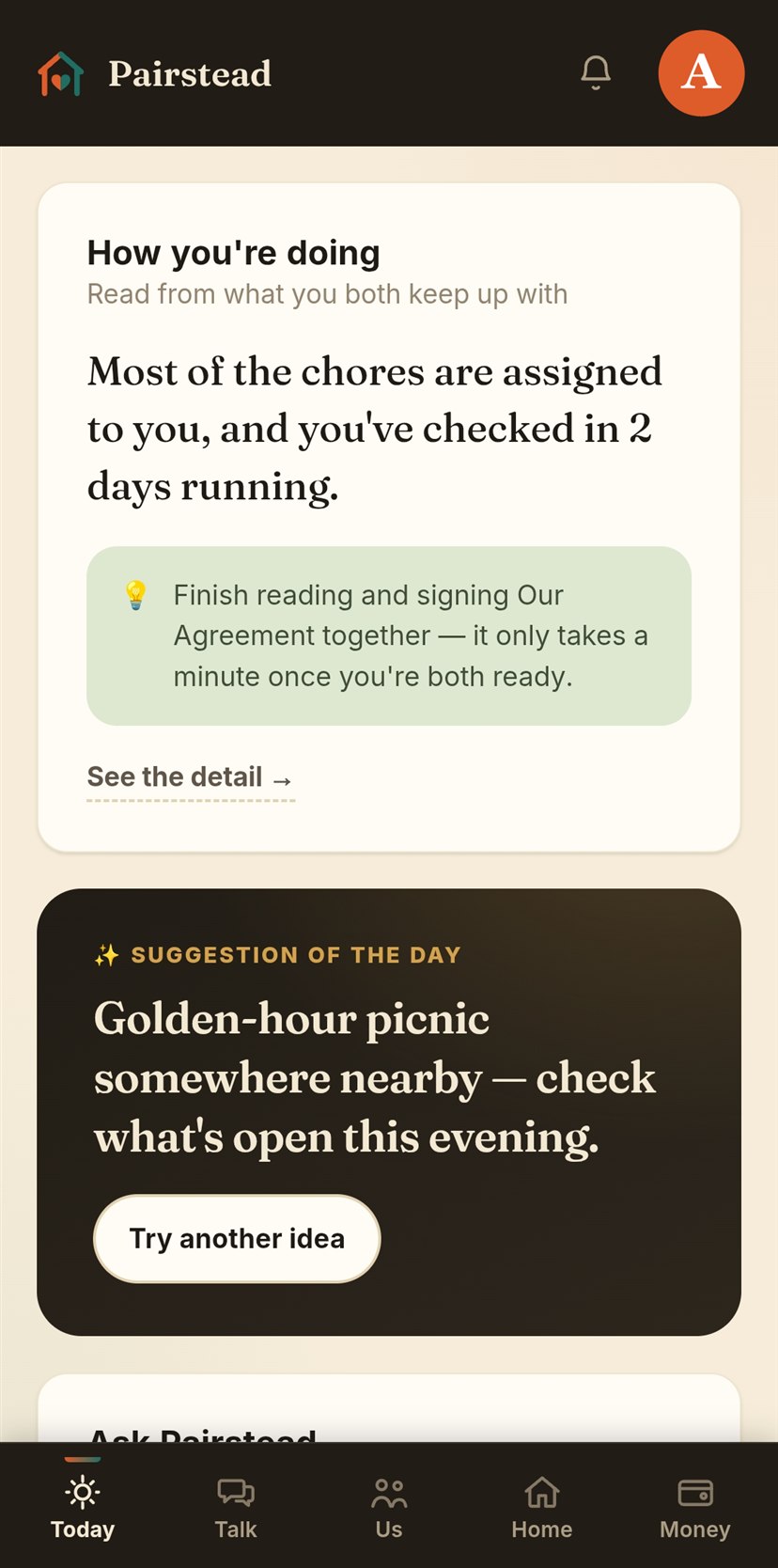
Today
The first thing either of you sees. How you are, how they are, what is coming, and one line about the day if you want to write one.
The card at the top is a sentence, not a score. Here it has noticed that most of the chores are on one person and that there have been two check-ins in a row, and it offers one small thing to do about it. Below it, an idea for the evening.
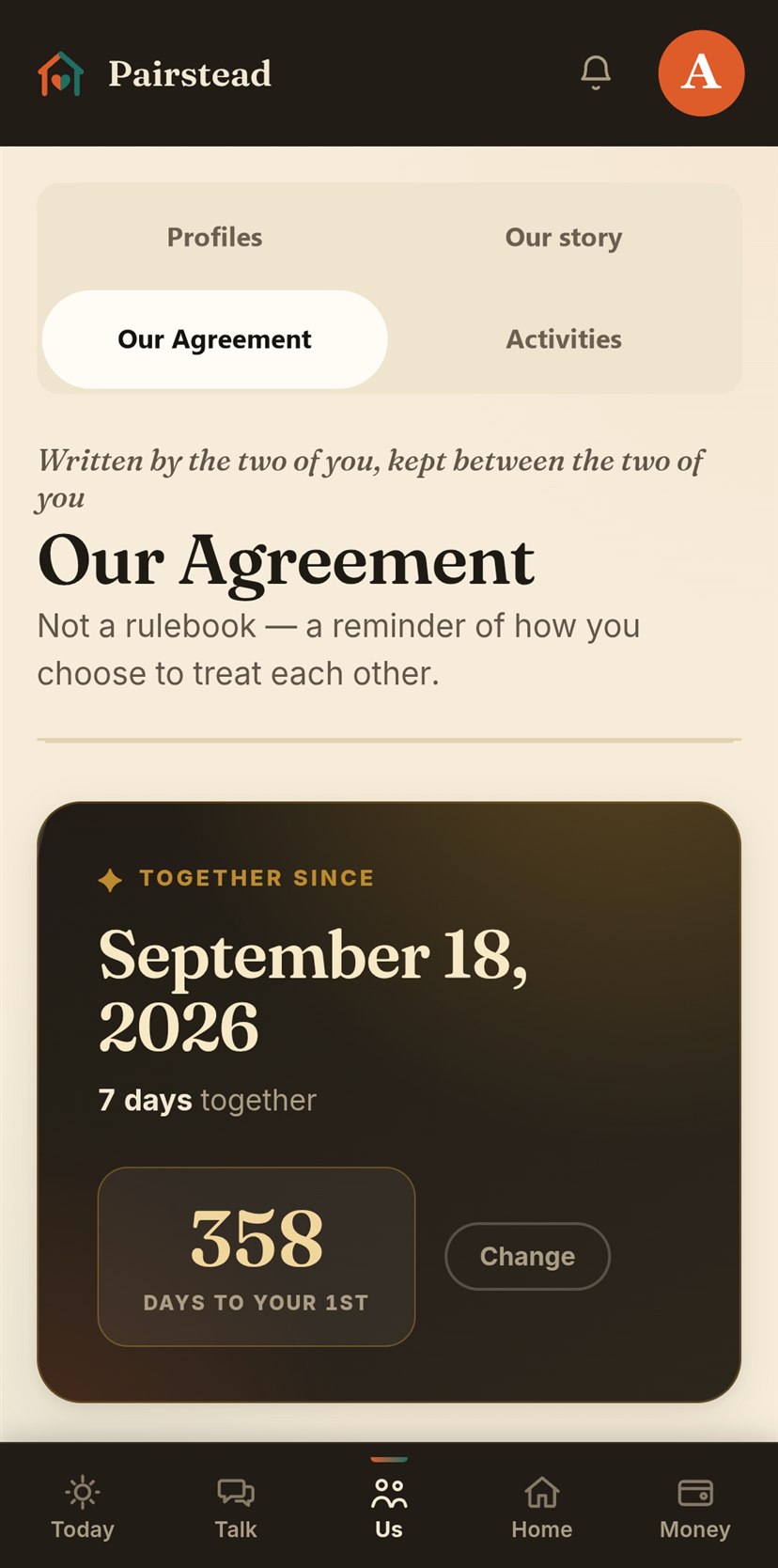
Our Agreement
Not a rulebook — a written reminder of how the two of you have chosen to treat each other. What you expect, what your red lines are, what you are already good at. Both of you sign it, and changing it un-signs it.
It opens with the day you got together and counts down to the next anniversary. The agreement itself sits underneath, and every line is marked A or B so it stays clear whose it was — two colours that run through the whole app, one for each of you.
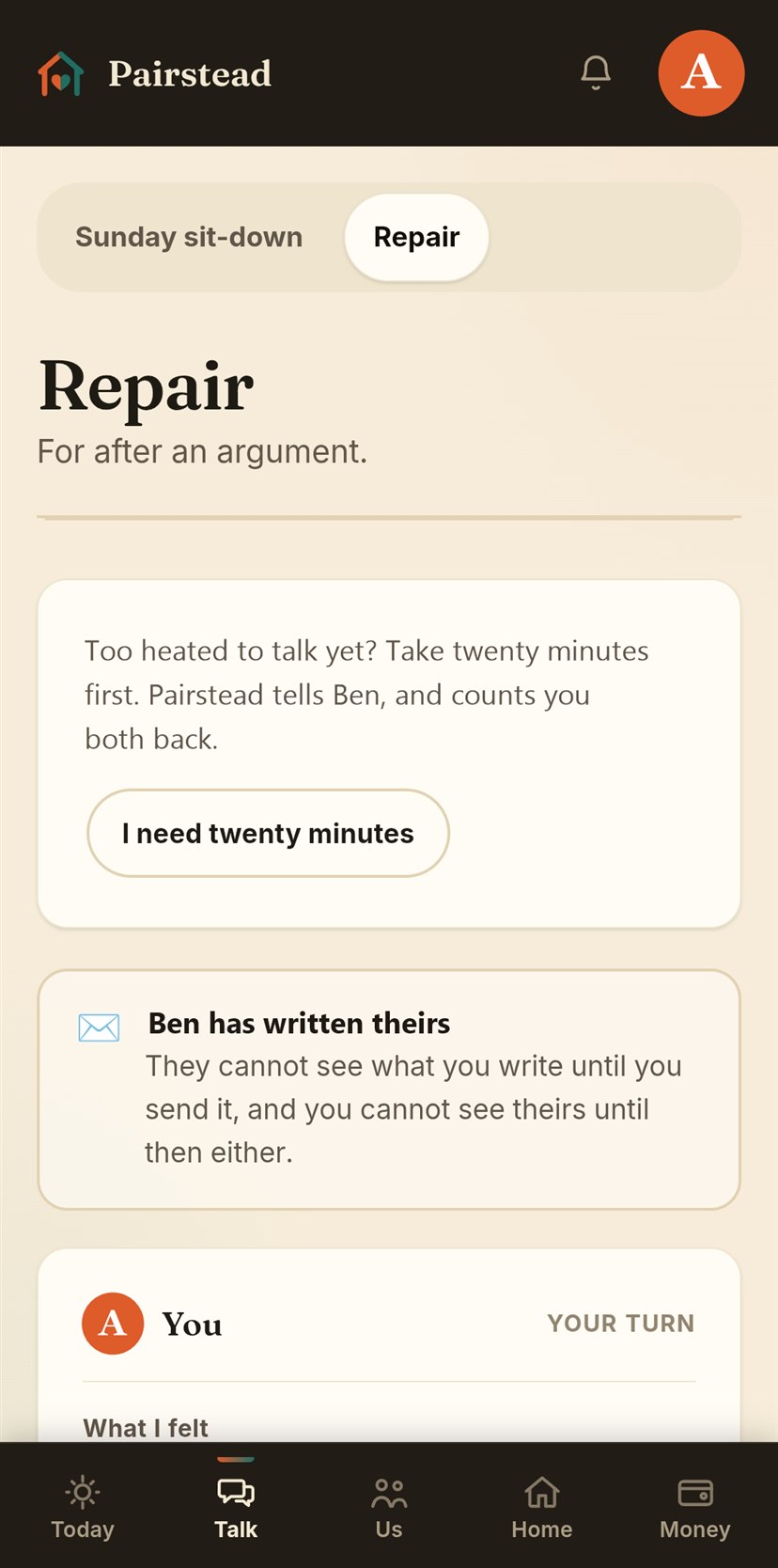
Repair
For after an argument. Three questions — what I felt, what I think you felt, what I want now — answered on your own.
This is the screen the app is really built around. Ben has written his half; Ana has not, so nothing of his has reached her. It opens for both of them at the same moment, which means neither one has to be the one who goes first.
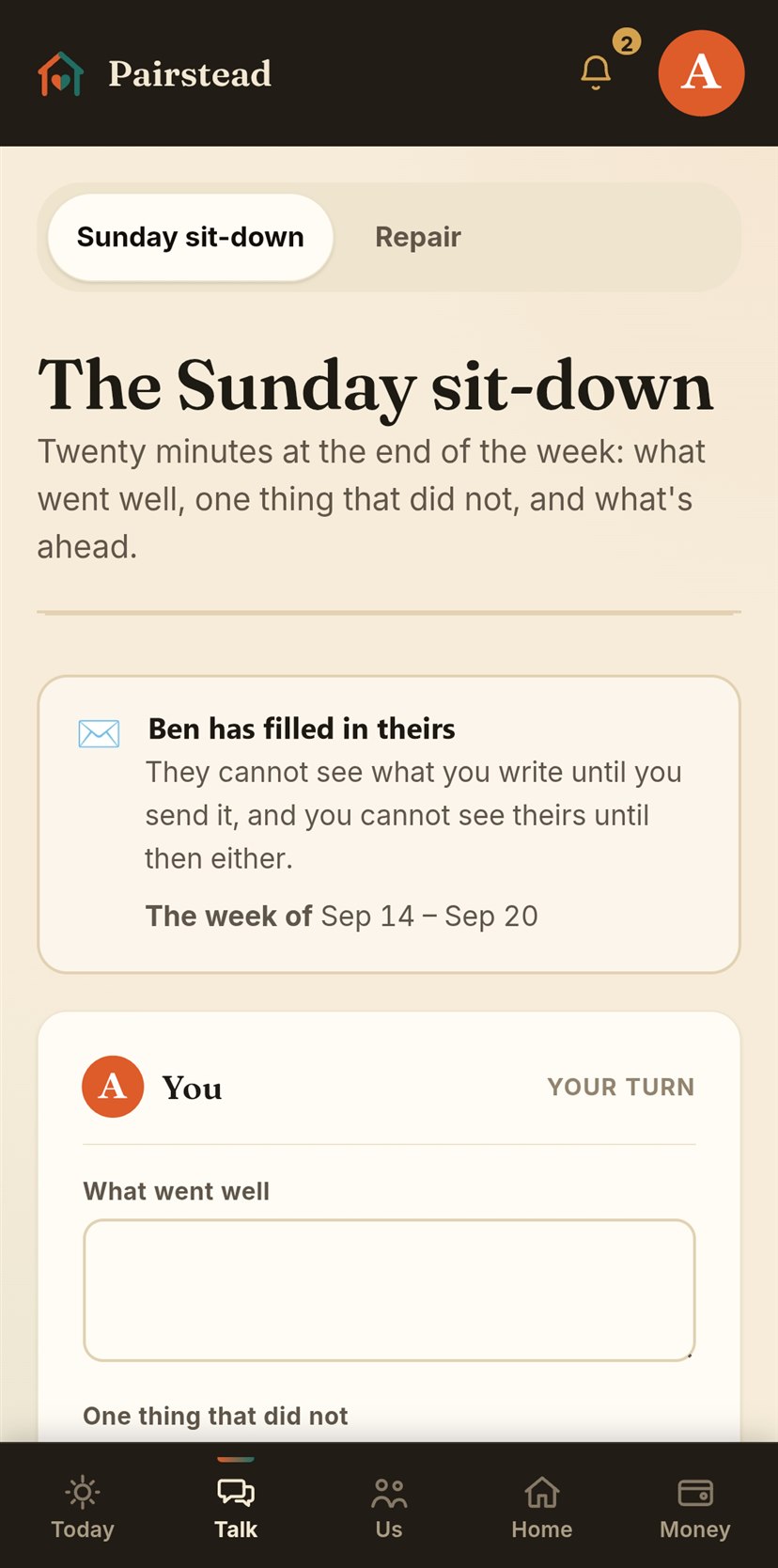
The Sunday sit-down
Twenty minutes at the end of the week: what went well, one thing that did not, and what is ahead. Sealed the same way as Repair, so neither of you is writing to match the other.
The withholding is done on the server, in rows the other person's phone is never sent — not by hiding something on the screen.
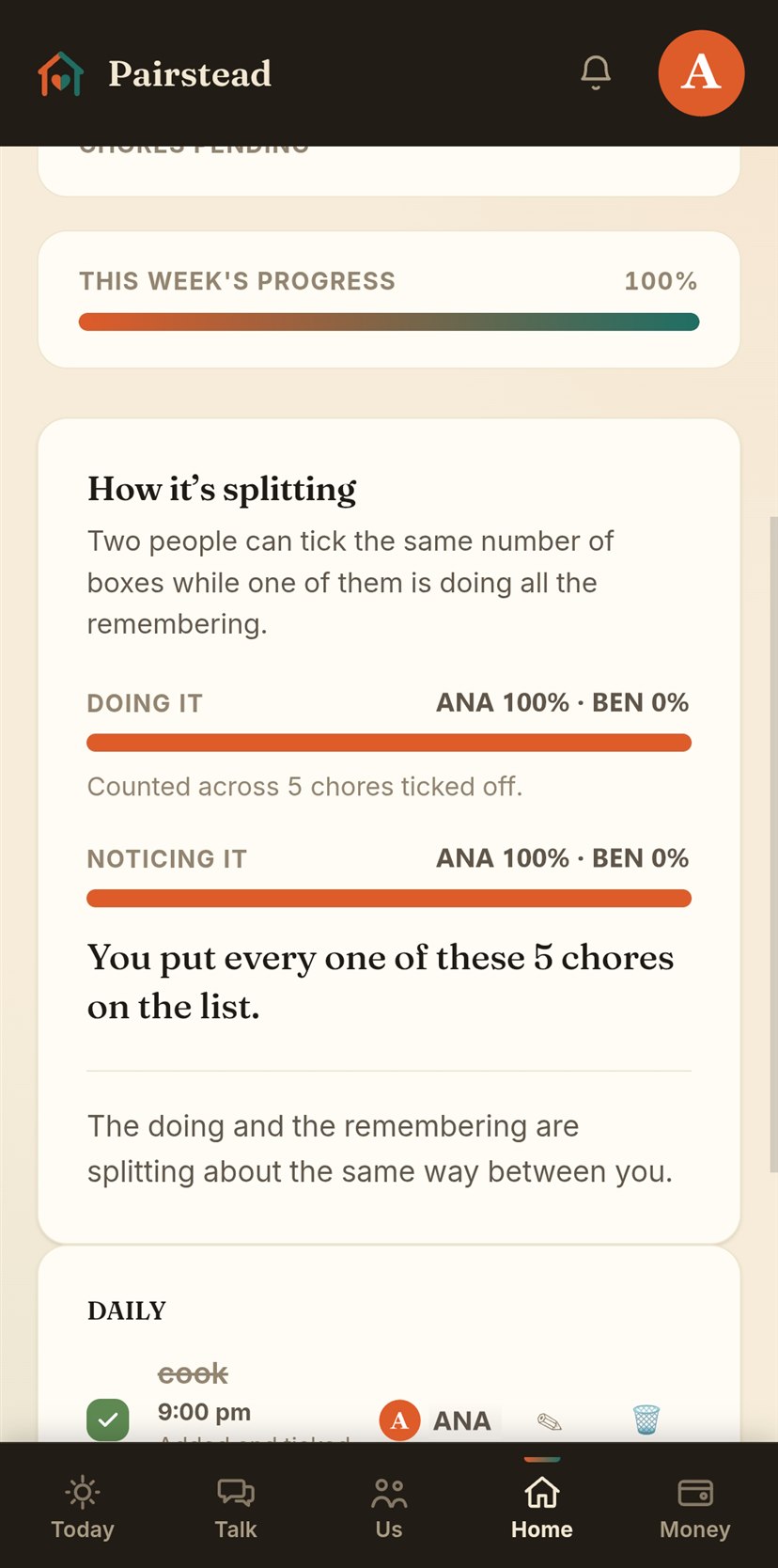
Chores, and the half nobody counts
The lists you would expect, split between you and repeating on the days you choose. And then the thing Pairstead does that a chore app usually does not.
Doing it and noticing it are counted separately, because two people can tick the same number of boxes while one of them is doing all the remembering. Whoever adds a chore is recorded as having noticed it, at no cost to either of you.
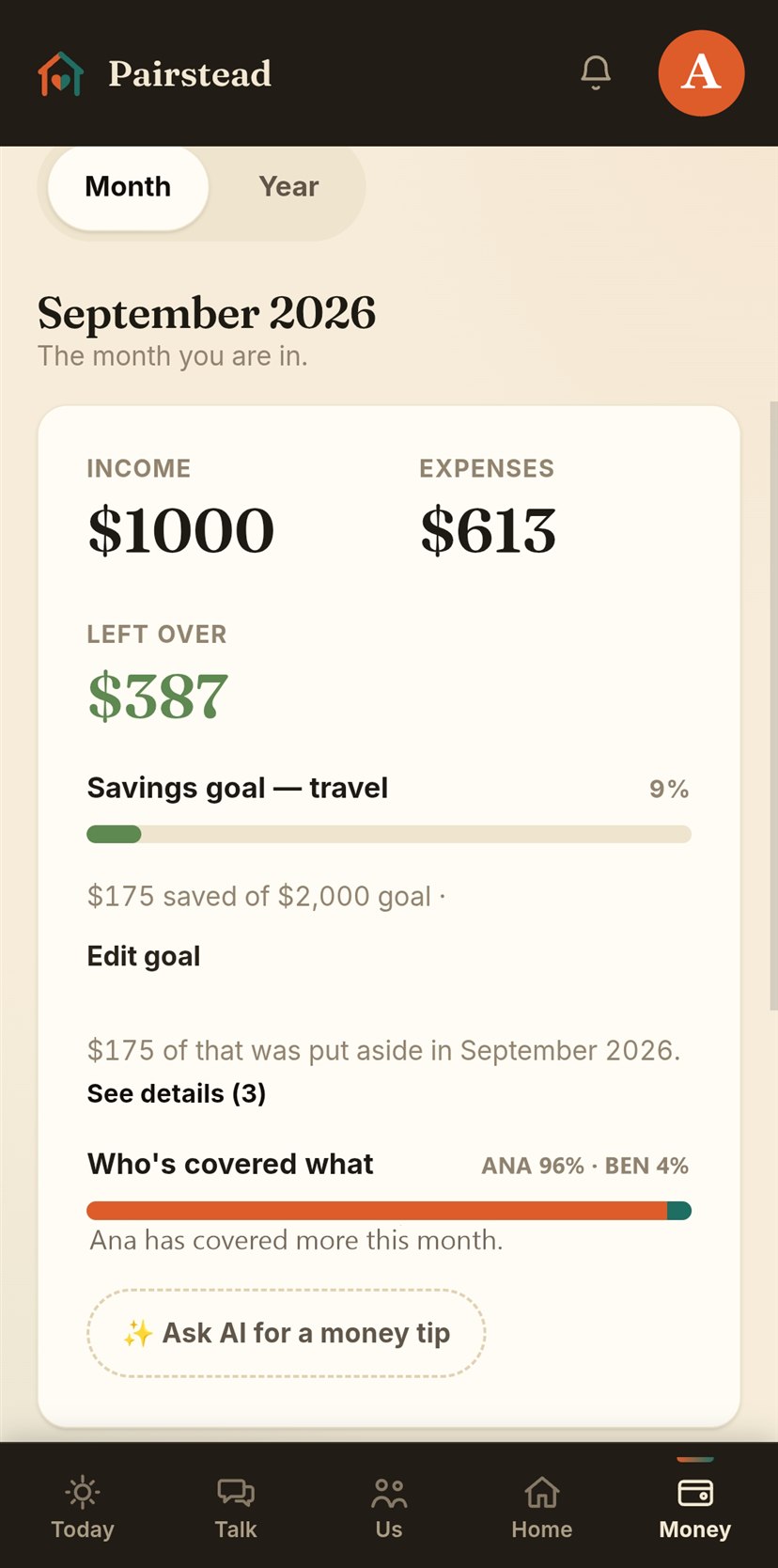
Money
A month at a time. What came in, what went out, what is left, and what you are saving towards — with a year view behind the toggle at the top.
Who's covered what is the line that stops an argument before it starts. It is a fact, sitting there, rather than something one of you has to raise.
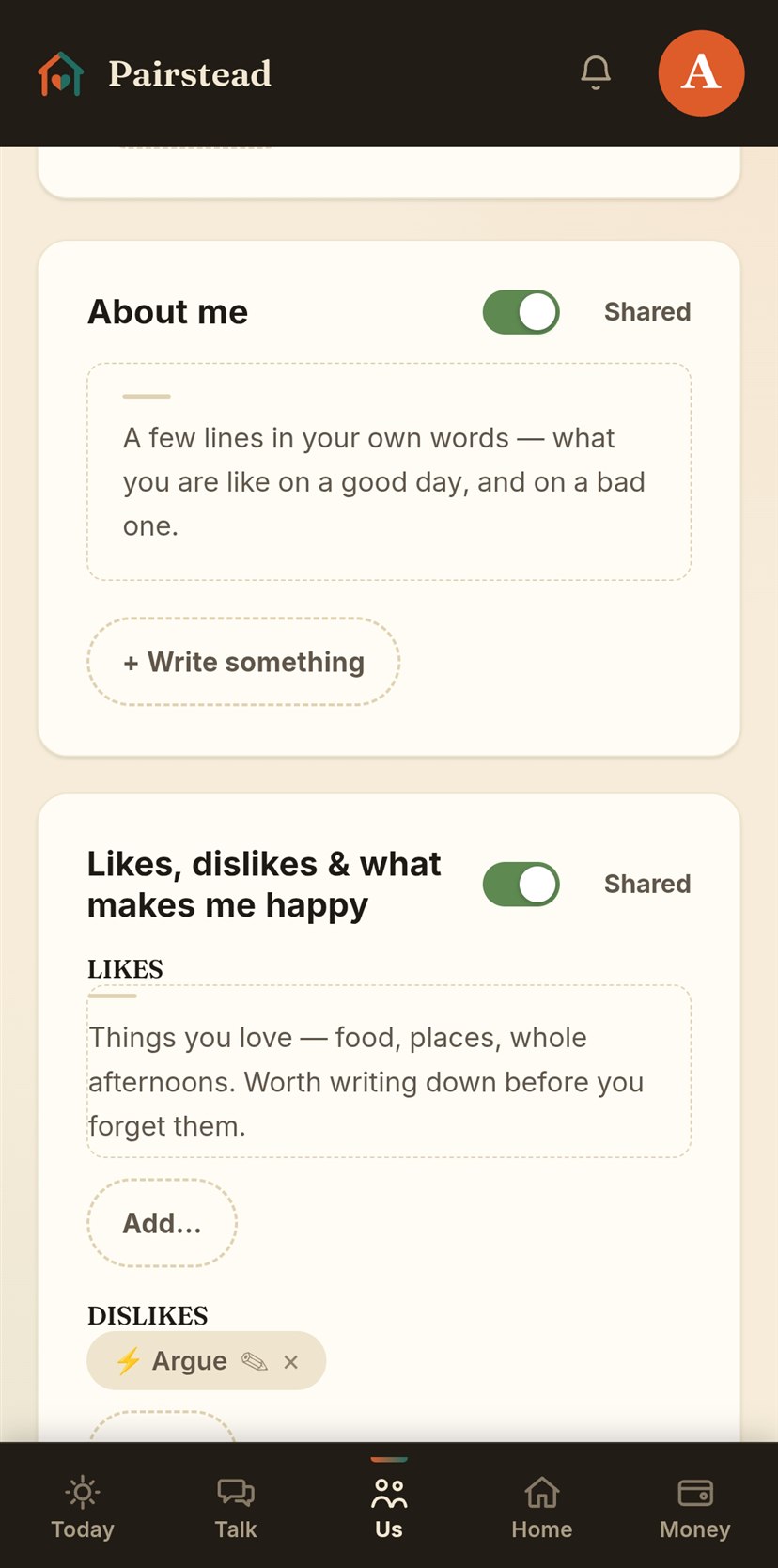
The two profiles
What you love, what you cannot stand, what makes you happy, and how you would rather be handled on a bad day. Yours and theirs, side by side.
Each block has a switch on it. Seeing is not editing: your partner's profile arrives on your phone to be read, and only they can change it.
That is the whole of it
There is more in each room than fits on this page — the calendar, the shopping lists, profiles for children and pets, the cycle tracker, the plans you make together and tick off afterwards. But nothing is hiding behind a price, because nothing in Pairstead costs anything.
Make an account, or put it on your phone first. If you would rather read than click, what Pairstead is says it in words.